Oro Valley Has 12% of Its Land Left. Voters Decide What's Next.
Oro Valley votes November 3, 2026 on OV's Path Forward, its next 10-year general plan. What the land use chapter says about the town's remaining 12 percent.
A general plan is the document that decides where a town lets housing go. Arizona makes voters ratify it every ten years, and Oro Valley's turn comes on November 3.
Oro Valley is nearly out of room to build. The land use chapter of the plan its voters rule on this fall says so in figures: roughly 12 percent of the town's land is still available for development, and most of that is underutilized parcels already surrounded by what got built first. Absent annexation, the plan reports no remaining sites for a large subdivision — 130 homes or more, by its own definition. That document is OV's Path Forward, and it is the question on Oro Valley's ballot this November. What it settles is not whether the town grows. It is what goes on the last of the land, next door to people already living there.
A Growth Plan Is Not a Building Permit
Arizona requires the vote. Under A.R.S. §9-461.06 a general plan runs for up to ten years, and a city or town of 10,000 or more must submit each new one to its voters for ratification. Oro Valley's came out of a multi-year drafting process the town's plan site says drew more than 10,700 resident comments, and it runs to 286 actions across twelve topic areas — housing, land use, water resources and conservation, transportation and views among them — each assigned to a town department. What it is not is a rezoning: no parcel changes zoning because voters approve it. It is the policy a council and a planning commission weigh an application against.
What Is Left, and What Is Already There
For anyone shopping in Oro Valley, the land use chapter is the part to read. Detached single-family homes are about 86 percent of the town's existing housing stock, and single-family residential covers 77 percent of its developed land. The town has been issuing between 100 and 200 single-family permits a year, and the plan expects that figure to drop significantly over the next ten years — a consequence of arithmetic rather than policy. Residentially zoned land that has not been built on carries capacity for roughly 2,652 more units. Against that, the plan puts existing housing need at 920 units in 2024 and projects 1,310 by 2029.
- 12%
- Share of Oro Valley land still available for development, per the plan's land use element
- 0
- Remaining sites for a large subdivision of 130+ homes, absent annexation
- 2,652
- Units of capacity on undeveloped residentially zoned land, 2026
- 286
- Actions in the plan, each assigned to a town department
What Gets Built on the Last 12 Percent
Infill and redevelopment, in the plan's language — smaller sites, and the reworking of parcels that already hold something. It leans toward townhomes, condominiums and patio homes rather than more detached lots, and names attainable price points as an objective. Traditional apartments are about 14 percent of the existing stock, and the plan would confine new high-density apartments to selected areas with access to shops, services and major roadways. On height it favors one- and two-story buildings, accepts three stories on appropriate sites, and holds residential and senior-care buildings to no more than three — the sort of language that decides what a parcel across the street can become.
Quick reference (September 20, 2026): OV's Path Forward, the Town of Oro Valley's 2026 general plan, is on the November 3, 2026 ballot for voter ratification. Pima County voter registration closes October 5; early voting opens October 7; the last day to request a mailed ballot is October 23; the town's recommended mailing deadline is October 27; in-person early voting ends October 30. Under A.R.S. §9-461.06 the outcome turns on a majority of those voting on the question. Confirm dates with the Pima County Recorder before relying on any of them.
A No Vote Is Not a Blank Page
The statute answers that one too. If a majority of those voting on the proposition does not approve the new plan, the current plan stays in effect until one is approved, and the governing body resubmits or revises it for a later election. Oro Valley's current plan is Your Voice, Our Future, ratified in 2016 and carrying 310 actions. So a rejection does not halt development or freeze anything in place; it keeps a decade-old document as the operative standard and sends the drafting back around. Either outcome leaves the town with a general plan on November 4. The question is which one.
Why This Belongs on a Buyer's Calendar
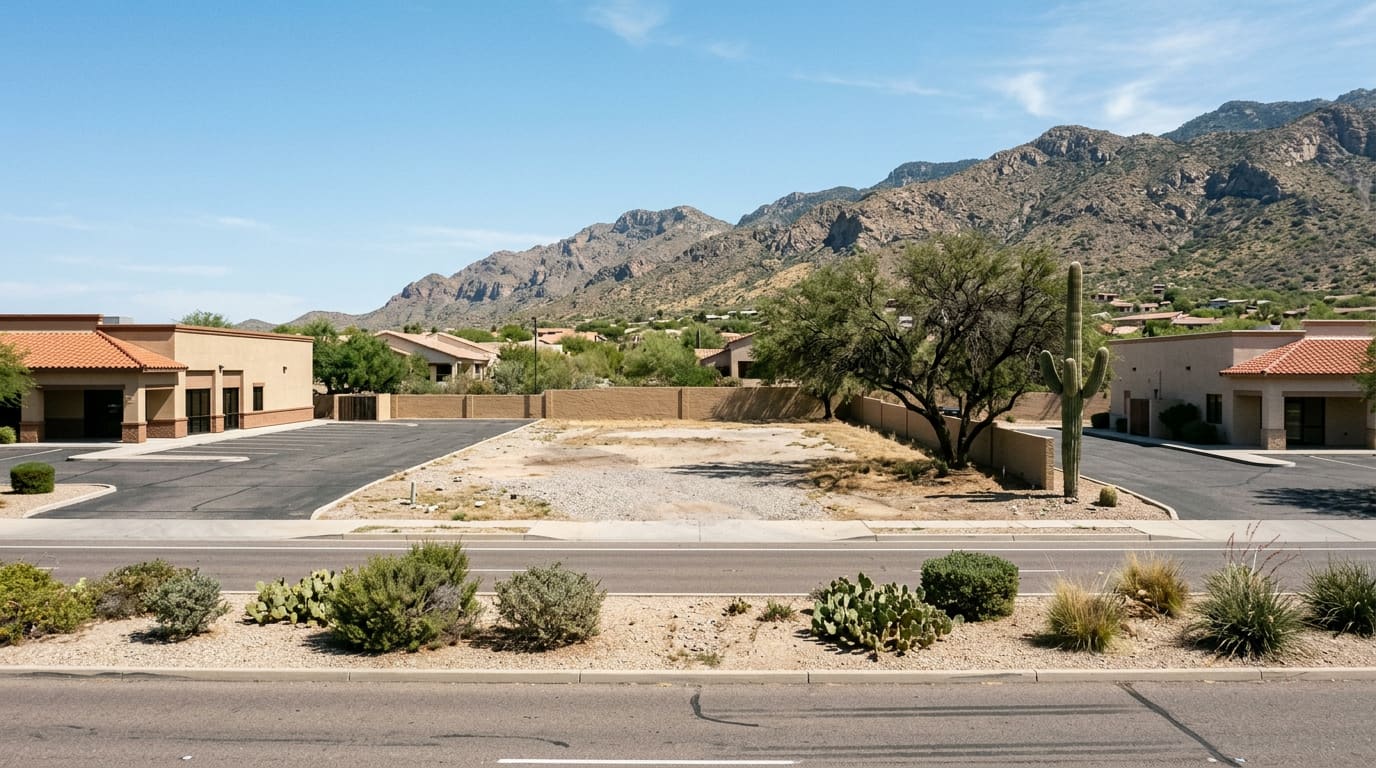
In a town with 12 percent of its land left, nearly every future project is an infill project, so the practical question is never whether Oro Valley grows. It is which parcel, and under what rules. The vacant acre behind a house in Rancho Vistoso, the aging commercial strip on Oracle Road, the lot at the edge of a subdivision that never filled in — the plan's height language, its housing-type preferences and its limits on where apartments may go are what an application on any of them gets weighed against. That is worth ten minutes before a ballot arrives in the mail: the land use and housing chapters are posted in full at ovpathforward.com, and registration closes October 5.
Sources
OV's Path Forward (Town of Oro Valley) — "Land Use" — ovpathforward.com/land-use — accessed September 20, 2026 (for the roughly 12 percent of town land still available for development and its character as underutilized parcels surrounded by existing development; the absence of remaining large subdivisions of 130 homes or more without annexation; single-family residential at 77 percent of developed land; 100 to 200 single-family permits a year and the expectation that the figure drops significantly over the next ten years; and the preference for one- and two-story buildings with three stories on appropriate sites and a three-story cap on residential and senior-care buildings).
OV's Path Forward (Town of Oro Valley) — "Housing" — ovpathforward.com/housing — accessed September 20, 2026 (for detached single-family homes at about 86 percent of existing housing stock and traditional apartments at about 14 percent; the emphasis on townhomes, condominiums and patio homes; attainable housing options as an objective; the limiting of new high-density apartments to selected areas with access to shops, services, facilities and major roadways; existing housing need of 920 units in 2024 and 1,310 projected for 2029; and 2,652 units of capacity on undeveloped residentially zoned land in 2026).
OV's Path Forward (Town of Oro Valley) — "Executive Summary" — ovpathforward.com/executive-summary — accessed September 20, 2026 (for the 286 actions each assigned to a town department, the twelve topic areas, more than 10,700 resident comments, and the plan's emphasis on targeted growth and redevelopment given limited land available).
Arizona Revised Statutes §9-461.06 — azleg.gov/ars/9/00461-06.htm — accessed September 20, 2026 (for the ten-year effective period of a general plan, the requirement that a city or town of 10,000 or more submit each new general plan to the voters for ratification, and the rule that when a majority voting on the proposition fails to approve a new plan the current plan remains in effect until one is approved).
Town of Oro Valley Town Clerk — "Voter Information" — orovalleyaz.gov/Government/Departments/Town-Clerk/Town-Election-Information/Voter-Information — accessed September 20, 2026 (for the November 3, 2026 general election date and the October 5 registration deadline, October 7 start of early voting, October 23 last day to request a mailed ballot, October 27 recommended mailing deadline and October 30 last day of in-person early voting).
Pima County — "Upcoming Elections and Events" — pima.gov/810/Upcoming-Elections-and-Events — accessed September 20, 2026 (for the November 3, 2026 general election day and polling hours).
Tucson Spotlight — "Oro Valley voters to decide fate of 10-year growth plan" — tucsonspotlight.org/oro-valley-voters-to-decide-fate-of-10-year-growth-plan — published September 16, 2026, accessed September 20, 2026 (for the November 3, 2026 ballot date, the 286 actions, the 310 actions in the 2016 Your Voice, Our Future plan, the more than 10,700 public comments, and the statement that the 2016 plan remains in effect if voters reject the new one).
All details are current as of September 20, 2026; ballot measures, election deadlines and draft plan documents change, so readers should confirm current information with the Town of Oro Valley and the Pima County Recorder before relying on any single figure. Nothing here is legal, tax or voting advice. This post is for informational purposes only and is not an offer to sell or a solicitation of an offer to purchase real estate. Kyle Berglund and Tierra Antigua Realty fully support and comply with the Fair Housing Act and the Equal Opportunity Act.
Topics
- High Growth Area
- Oro Valley
- Rancho Vistoso
- General Plan
- Land Use
- Infill
- Pima County
- 85737
- 85755