A Taller Wall, a Bigger Shed, and 15 Days' Warning
Tucson's CODE '26 update would raise wall and accessory-structure height limits, free cisterns from setbacks, and post notice before a demolition.
CODE Tucson '26 is a package of proposed code changes across eight themes. Most is procedural cleanup. The part a homeowner will notice is about what can legally stand in a back yard.
Walk an older Tucson street and its shape comes from numbers almost nobody has read. Six feet is why the block wall along the alley stops where it stops. Twelve feet is why the thing out back is a carport and not a workshop with a loft above it. Those numbers sit in the Unified Development Code, and the city has a package in front of the Planning Commission that would move several of them.
- 6 to 7 ft
- Proposed perimeter fence and wall height
- 12 to 15 ft
- Proposed limit for a detached accessory structure
- 5 to 7 ft
- Proposed exemption line for a doghouse or play equipment
- 15 days
- Posted notice proposed ahead of a planned demolition
Three Height Limits Move
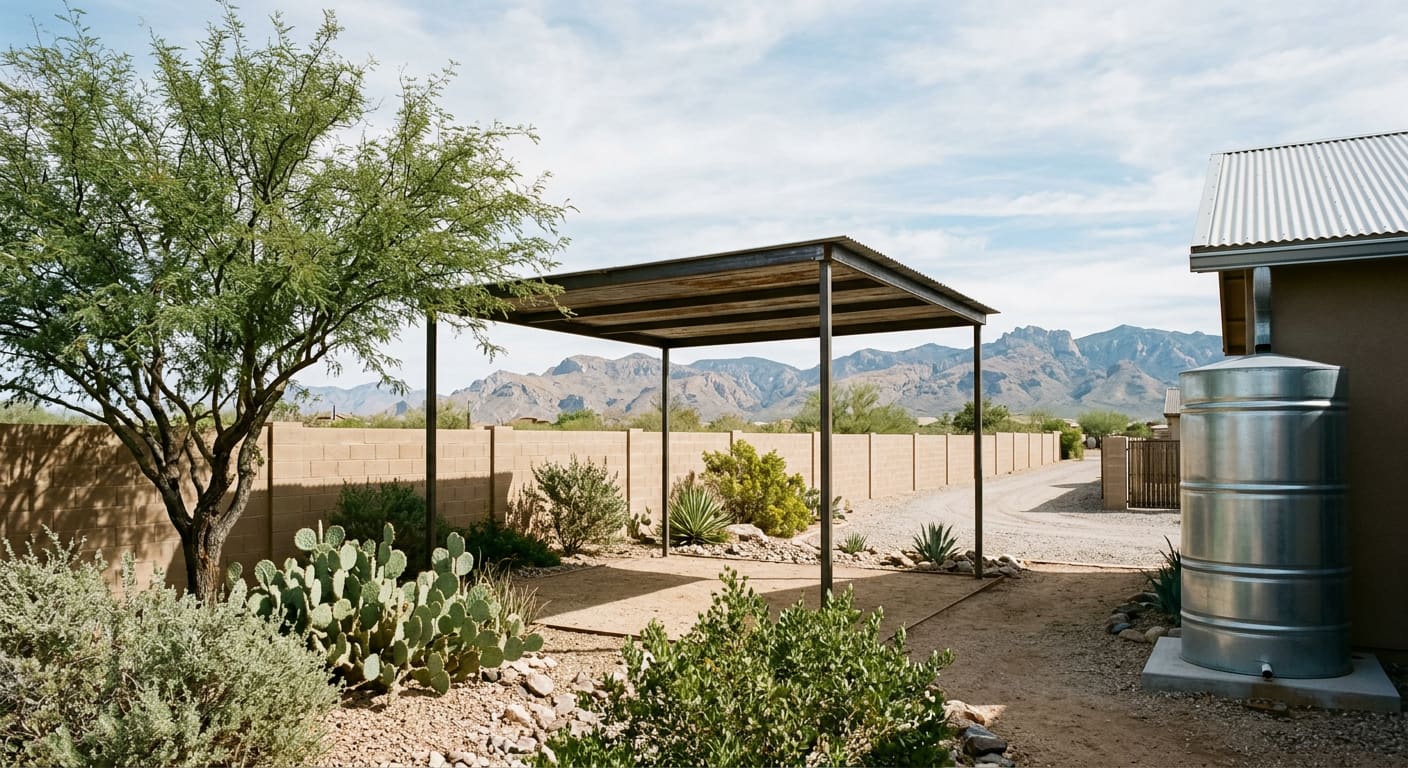
The perimeter wall is the one most people will see. Tucson caps walls and fences within a perimeter yard at six feet, which the city says does not line up with the building code it has adopted; the amendment adds a foot. Detached accessory structures — the shed, the shop, the freestanding carport — are capped at twelve feet unless they are attached to the principal structure, and the city's stated problem is that twelve does not leave enough clearance for practical use, vehicle access, or solar equipment design. That limit would go to fifteen, and it is a general height limit rather than a setback allowance: it governs the shed wherever on the lot it stands.
The third number works differently from the other two, and it is worth being exact about, because it is the one most likely to be read backwards. Five feet is not a ceiling on a doghouse or a swing set. It is the line below which the accessory-structure rules stop applying at all — the code's standards for accessory buildings apply in every zone except to a structure five feet or less in height and ten square feet or less in area, the examples given being a doghouse, a refuse container enclosure, or play equipment. Moving that line to seven feet does not cap anything. It widens the set of small backyard structures the code declines to regulate, and the city's stated reason is that the existing figure has not kept up with modern construction techniques or needs. The packet addresses the height figure only and says nothing about the ten-square-foot condition beside it, so a structure that is tall and small is a different question from one that is tall and wide.
What CODE Tucson '26 Actually Is
Community Ordinances and Development Enhancements — CODE Tucson '26 — is a proposed update to the city's planning and development codes, directed by the Mayor and Council, organized into eight themes and building on a 2023 clean-up that left a list of items for later. Most of it is procedural: parking calculations, sign standards, review steps, and swapping the term "perimeter yard" for "setback" throughout, because the code has been using both interchangeably. The city published a plain-language guide that is explicit about being a summary rather than the code language itself. Two community meetings were held in June, and an addendum dated August 18, 2026 added a second round of items drawn from those meetings and a community survey.
The Shed You Already Have
A separate item is aimed at buildings that already exist. Plenty of legally established accessory structures in Tucson sit closer to a property line than today's setbacks would allow, and the code has not been clear about whether converting one into habitable space requires a fresh setback approval. The amendment would add a standard that says how that conversion works — which matters to anyone looking at a detached garage and a floor plan. Two related clarifications ride along: setback rules for garages, carports and shade structures in front yards get spelled out (UDC sections 6.4.5.C and 6.4.5.D), and the code would state plainly that an accessory dwelling unit cannot be added to a site that already has three or four dwellings, or to a parcel created through a Middle Housing Subdivision.
What Counts as a Bedroom
One item in the package has nothing to do with height and everything to do with how a house gets described. The code's definition of a bedroom would be clarified to distinguish a bedroom from other similar spaces — the example the city gives is a study connected to a living space. A Zoning Administrator determination has already provided long-standing direction on where that line falls, and the amendment writes it into the code rather than leaving it in a determination someone has to know to go looking for. The city frames the impact as clarity and easier use of the code, which is accurate and undersells it: bedroom count is one of the few numbers that follows a house through a listing, an appraisal and a permit file alike, and a room that reads as a bedroom to an owner and as a study to a plans reviewer is a disagreement better settled in the code than at the counter.
Repairs Inside a Historic Preservation Zone
Two items sit in the historic review process, and unlike the height limits they land on a specific set of Tucson addresses. Minor historic review — the smaller alterations and repairs inside a Historic Preservation Zone — carries a $1,500 cost maximum today, and the city's stated issue is that it is difficult to allow any reasonable alteration at that threshold. The amendment removes the cost maximum for repairs. A second item removes the requirement that those reviews include an on-site meeting, which the city says can be difficult to schedule to quorum. In both cases the stated impact is the same: flexibility in the review steps while maintaining appropriate oversight.
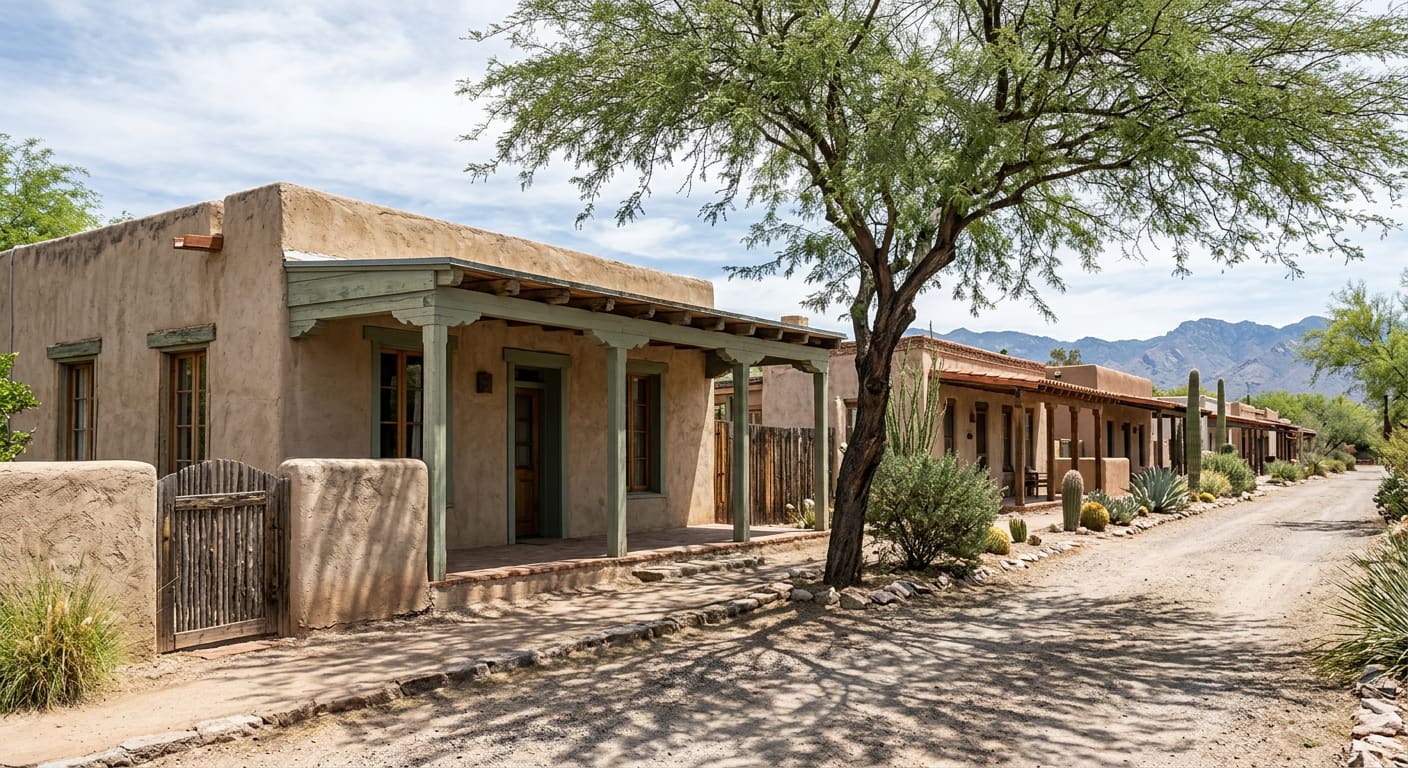
That is a narrower change than a height limit, and a sharper one for the people it reaches. Historic Preservation Zones are city zoning overlays enabled by a 1972 ordinance, and they cover whole neighborhoods rather than scattered landmarks — Dunbar/Spring, Armory Park and El Presidio are each governed by one, and in each of them an exterior change goes through design review rather than straight to a permit. For an owner there, a repair budget that stopped being realistic at $1,500 is the sort of number that quietly decides whether a porch gets fixed properly or gets left alone another year.
Cisterns Come Out of the Setback
One line in the package removes placement restrictions for cisterns, exempting some from setbacks on a Zoning Administrator determination. The city's stated reason is to encourage water harvesting, and the context is worth knowing. Tucson has required rainwater harvesting at commercial sites for well over a decade: the Mayor and Council adopted the Commercial Rainwater Harvesting ordinance on October 14, 2008, and it took effect June 1, 2010, with the stated aim of increasing the use of harvested rainwater at commercial sites and decreasing the draw on potable and reclaimed supplies. Nothing equivalent has ever applied to a house. On the residential side a cistern is entirely voluntary — and the setback rule was one of the few places the code actively made a tank harder to put somewhere useful, which is a strange thing for a desert city's code to do.
Fifteen Days Before the Backhoe
The item with the most direct bearing on how a block changes is also the plainest. Citing local concerns, the city proposes requiring a physical posted notice fifteen days ahead of a planned demolition, so that neighbors learn a structure is coming down before it does rather than after. A second change works the same seam from the other end: neighborhood meetings could be held up to ninety days before a formal application is submitted, up from sixty, which gives an applicant room to actually revise a plan after hearing from the people who live around it. Between them, they are the two items in this package that decide how much warning a street gets — which is a different question from how tall a wall may be, and arguably the one that matters more to how a neighborhood ages.
Where it stands: the package is proposed, not adopted, and nothing here is in effect. The information packet and the August 18, 2026 addendum are posted on the city's CODE Tucson '26 page, the Planning Commission study session was set for August 26, 2026, and the city says a final package goes to the Planning Commission and Mayor and Council in the second half of 2026 — so the version that gets voted on is the one to read, not this one. If a wall height or a shed height is the difference in a project you are planning, the number that governs is whatever is in the adopted code on the day you pull the permit.
Sources
City of Tucson Planning and Development Services — "CODE Tucson '26 (Community Ordinances & Development Enhancements)" — tucsonaz.gov/Departments/Planning-Development-Services/Planning-Initiatives/CODE-Tucson-26 — accessed September 7, 2026 (for the purpose and scope of the update, the eight themes, the June 1 and June 8, 2026 community meetings, the August 26, 2026 Planning Commission study session, and the statement that a final package goes to the Planning Commission and Mayor and Council in the second half of 2026). City of Tucson Planning and Development Services — "CODE Tucson '26 Information Packet" — tucsonaz.gov/files/sharedassets/public/v/1/pdsd/documents/planning-initiatives/code-tucson-26/code-tucson-26-info-packet-updated.pdf — accessed September 7, 2026 (for the perimeter wall increase from six feet and its building-code rationale, the accessory structure increase from twelve feet to fifteen feet and the clearance, vehicle access and solar equipment rationale, the small-structure increase from five feet to seven feet, the standard for converting existing accessory structures to habitable space, the accessory dwelling unit limitation on three- and four-unit sites and Middle Housing Subdivision parcels, the removal of cistern placement restrictions and the Zoning Administrator determination, the fifteen-day posted demolition notice, the neighborhood meeting window moving from sixty to ninety days, the clarification of the definition of a bedroom and the Zoning Administrator determination it codifies, the removal of the $1,500 cost maximum for repairs under minor historic review and the removal of the on-site meeting requirement for those reviews, the replacement of \"perimeter yard\" with \"setback,\" and the 2023 code clean-up this package builds on). City of Tucson Planning and Development Services — "CODE Tucson '26 Information Packet Addendum" (August 18, 2026) — tucsonaz.gov/files/sharedassets/public/v/1/pdsd/documents/boards-committees-commissions/planning-commission/8.26.26/attachment-d-code-tucson-26-information-packet-addendum.pdf — accessed September 7, 2026 (for the additional items drawn from two community outreach meetings and a community survey, and for the front-yard garage, carport and shade structure setback clarification at UDC sections 6.4.5.C and 6.4.5.D). University of Arizona Water Resources Research Center — "City of Tucson Section 4-01.0.0: Commercial Rainwater Harvesting" — wrrc.arizona.edu/publication/city-tucson-section-4-0100-commercial-rainwater-harvesting — accessed September 7, 2026 (for the Mayor and Council adoption of the Commercial Rainwater Harvesting ordinance on October 14, 2008, its June 1, 2010 effective date, and its stated purpose of increasing the use of harvested rainwater at commercial sites and decreasing the use of potable and reclaimed water supplies). City of Tucson Unified Development Code — Section 6.6.2, \"Accessory Buildings and Structures\" — codelibrary.amlegal.com/codes/tucson/latest/tucson_az_udc/0-0-0-5291 — accessed September 7, 2026 (for the standards of Section 6.6.2 applying in all zones to buildings used for accessory uses except a structure five feet or less in height and ten square feet or less in area such as a doghouse, a refuse container enclosure or play equipment; for accessory structures other than accessory dwelling units not exceeding twelve feet in height unless attached to a principal structure; and for the six-foot maximum height of a wall or fence within a perimeter yard). City of Tucson Planning and Development Services — \"Historic Preservation\" — tucsonaz.gov/Departments/Planning-Development-Services/Historic-Preservation — accessed September 7, 2026 (for Historic Preservation Zones being City of Tucson zoning overlays enabled by a 1972 ordinance, and for development or exterior modification within one requiring design review). Proposed code language changes before adoption, so confirm any figure with the City of Tucson Planning and Development Services Department before relying on it. This post is for informational purposes only and is not an offer to sell or a solicitation of an offer to purchase real estate. Kyle Berglund and Tierra Antigua Realty fully support and comply with the Fair Housing Act and the Equal Opportunity Act.
Topics
- Local Insights
- CODE Tucson 26
- Unified Development Code
- Accessory Structures
- Water Harvesting
- Historic Preservation
- Tucson